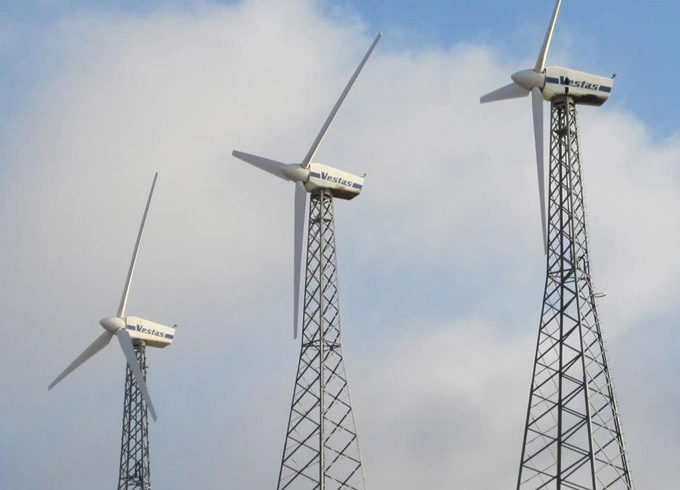
As the telecommunications industry accelerates toward a future powered by 5G and digital connectivity, the demand for reliable, scalable, and cost-effective infrastructure has never been greater. Among the key components enabling this transformation are lattice steel poles—also known as lattice towers. These angular steel structures are redefining how networks are built and maintained, offering unmatched versatility, durability, and performance.
From remote mountains to crowded cities, lattice steel poles are proving to be an essential foundation for modern telecom infrastructure.
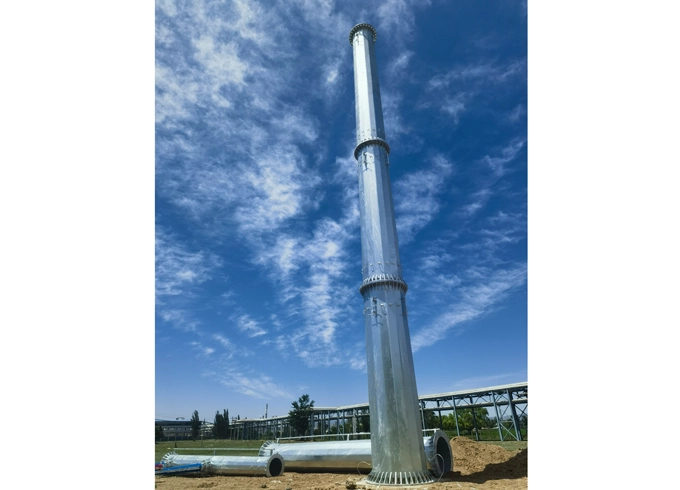

Lattice steel poles are engineered for strength. Their open angular design creates a high strength-to-weight ratio, making them resistant to both vertical and lateral loads. Unlike solid poles, their lattice configuration offers reduced wind resistance, enhancing stability even in regions prone to typhoons or heavy storms.
Manufactured from hot-dip galvanized steel, these structures boast exceptional corrosion resistance. This ensures long-term durability across extreme weather conditions—be it scorching deserts, humid coasts, or snow-covered highlands. Their resilience means fewer maintenance concerns and greater network uptime—both critical for telecommunications reliability.
One of the most significant advantages of lattice steel pole is their adaptability. Available in 3-leg and 4-leg designs, and offered in tubular or angular configurations, these poles can be tailored to suit diverse site conditions and operational needs.
Whether for urban micro-sites with height restrictions or rural locations requiring expansive reach, lattice steel poles can be designed in various heights and load capacities. They support a wide range of telecom equipment, including antennas, microwave dishes, and other critical infrastructure. Their modular design also enables future upgrades, allowing telecom providers to scale their networks efficiently as demands grow.
From production to installation and maintenance, lattice steel poles deliver significant cost advantages. Their lightweight, prefabricated components simplify logistics and reduce transport costs—especially in hard-to-access locations. On-site assembly is faster and more economical compared to bulkier concrete or full-length steel alternatives.
Additionally, their galvanized finish minimizes long-term maintenance expenses by preventing rust and structural degradation. Over the lifecycle of a telecom project, these savings translate into a more budget-friendly infrastructure solution without compromising performance or reliability.
Today’s telecom infrastructure must do more than just transmit signals. With the rise of 5G, smart cities, IoT, and public surveillance systems, poles must support a variety of technologies and services. Lattice steel poles excel in this multifunctional role.
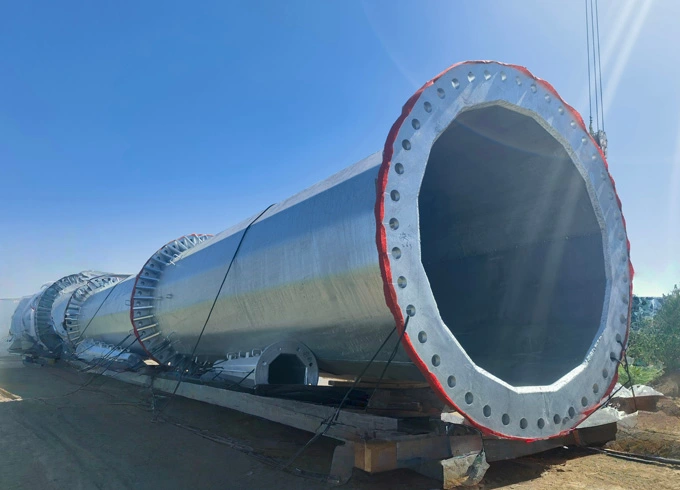
Their robust design accommodates multiple antennas, 5G small cells, power cables, lighting systems, and even surveillance cameras. This makes them ideal for integrated urban applications, highway monitoring, and hybrid energy-telecom systems. Whether deployed in city centers or remote rural zones, lattice poles are engineered for the future of connectivity.
Lattice steel poles are more than just structural components—they’re strategic assets in the telecom evolution. Their combination of strength, flexibility, cost-efficiency, and multi-use capability makes them indispensable for network expansion in a fast-changing digital world.
As telecom operators seek reliable solutions to build and extend their infrastructure, lattice steel poles stand tall—literally and figuratively—as a symbol of smart, scalable, and sustainable growth.

 English
 Español
 français
 português
 العربية
 русский