Choosing the right monopole tower manufacturer is an important step for telecom operators, EPC contractors, and infrastructure developers. A monopole tower is not a standardized product that can simply be selected by height and appearance. Its structural performance depends on engineering design, manufacturing quality, environmental conditions, antenna loading, and installation requirements.
When evaluating monopole manufacturers, buyers should look beyond the quotation price and consider whether the supplier has the engineering experience, production capability, quality control system, and customization ability required for their specific project.
A reliable manufacturer should be able to support the complete process, from tower design and material selection to fabrication, galvanizing, inspection, and delivery.
Engineering capability is one of the most important factors when selecting a monopole tower supplier. A qualified manufacturer should not only produce steel structures but also understand how different project conditions affect tower design.
A professional monopole tower manufacturer should have experience with:
Structural design based on project requirements
Wind load and antenna load calculations
Tower height and configuration optimization
Foundation coordination
Different connection designs
Applicable international design standards
The required tower design can vary significantly depending on the installation environment. A monopole tower installed in a coastal area with high wind exposure may require a different structural solution from one installed in an urban area with lighter environmental loads.
Engineering teams should also understand antenna requirements, including:
Number of antennas
Antenna size and weight
Microwave dish requirements
Equipment platforms
Cable loading
Future expansion needs
For customized projects, working with a manufacturer that can provide engineering support helps reduce design changes and installation risks.
Junjiang provides customized steel tower solutions for telecom and infrastructure projects, including monopole towers designed according to specific project requirements. More products and tower solutions can be found on the Junjiang product page.
Quality standards provide important information about how a manufacturer controls design, production, and material performance.
Before placing an order, buyers should check whether the manufacturer can meet the standards required for their target market and project type.
| Standard | Purpose |
|---|---|
| ANSI/TIA-222 | Structural standard for antenna supporting structures |
| AWS D1.1 | Welding quality requirements for steel structures |
| ASTM A123 / EN ISO 1461 | Hot-dip galvanizing requirements |
These standards cover different aspects of tower production, including structural design, welding procedures, and corrosion protection.
However, certifications alone do not guarantee product quality. Buyers should also review whether the manufacturer has practical experience applying these standards in real projects.
A good supplier should be able to provide technical documents, material information, inspection records, and quality control procedures when required.
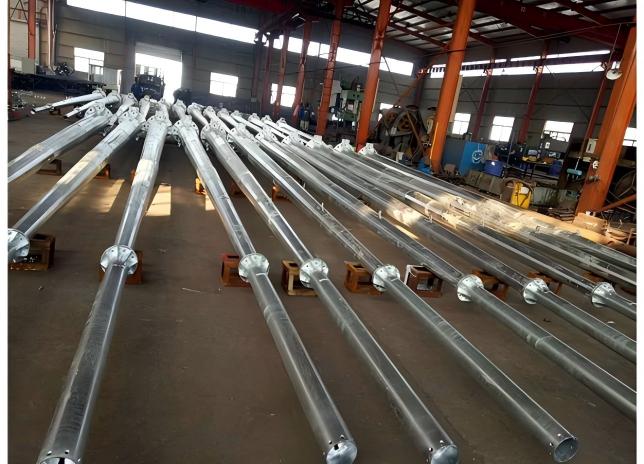
Manufacturing quality directly affects the service life, safety, and reliability of a monopole tower.
During fabrication, important factors include:
Steel material selection
Cutting and forming accuracy
Welding quality
Dimensional control
Surface treatment
Final inspection
A monopole tower usually consists of multiple steel sections connected through flange or overlap connections. Accurate fabrication is essential to ensure proper assembly and structural performance during installation.
Galvanizing quality is another critical consideration, especially for outdoor telecom infrastructure.
Hot-dip galvanizing provides corrosion protection by creating a zinc coating on the steel surface. The quality of galvanizing affects how well the tower performs in challenging environments, including coastal, humid, or industrial areas.
When comparing monopole manufacturers, buyers should ask about:
Galvanizing process
Zinc coating requirements
Inspection methods
Corrosion protection standards
Experience with outdoor infrastructure projects
A manufacturer with complete production and surface treatment capabilities can provide better control over the final product quality.
A monopole tower must be designed according to the actual loads it will experience at the installation site.
A professional manufacturer should evaluate project-specific factors such as:
Basic wind speed
Tower height
Antenna quantity and size
Equipment weight
Microwave dish loading
Installation location
Terrain conditions
Required safety factors
For example, a tower supporting multiple antennas and communication equipment requires a different structural design from a tower supporting only a small antenna system.
The connection type is also an important consideration. Depending on transportation conditions and installation requirements, manufacturers may provide different solutions, including flange connections or overlap connections.
Junjiang's monopole tower solutions support customized configurations for different telecom applications, helping customers select suitable structures according to project conditions.
Before requesting a quotation, buyers should prepare key project information, including tower height, antenna loading, location, design standard, and required configuration. This allows manufacturers to provide a more accurate technical proposal.
Before finalizing an order, buyers should confirm both technical specifications and supplier capabilities.
Important items include:
Tower height and design type
Antenna and equipment loading
Wind load requirements
Connection method
Material specifications
Galvanizing requirements
Applicable design standards
Quality inspection process
Production schedule
Packaging and transportation requirements
A clear technical specification helps avoid misunderstandings during manufacturing and installation.
It is also important to evaluate the manufacturer's project experience. A supplier that understands international transportation, documentation requirements, and installation conditions can provide smoother project execution.
For telecom operators, EPC contractors, and distributors, selecting a manufacturer with complete engineering and manufacturing capabilities can reduce project risks and improve long-term tower performance.
If you are sourcing a customized monopole tower, you can contact Junjiang with your project details, including tower height, loading requirements, installation location, and technical specifications.
Selecting the right monopole tower manufacturer requires more than comparing product prices. Engineering capability, manufacturing quality, galvanizing performance, certification compliance, and project experience all influence the final tower performance.
Reliable monopole manufacturers should be able to provide customized solutions based on real project conditions, from structural design and material selection to fabrication and delivery.
By evaluating these key factors before placing an order, buyers can choose a supplier that better matches their technical requirements and project goals.
Consider engineering capability, manufacturing experience, quality standards, customization ability, and previous project experience.
Common standards include ANSI/TIA-222 for structural design, AWS D1.1 for welding, and ASTM A123 or EN ISO 1461 for galvanizing.
Yes. Manufacturers can customize tower design based on antenna quantity, equipment weight, wind conditions, height requirements, and installation location.
Galvanizing provides corrosion protection and helps extend the service life of outdoor steel structures.
Buyers should provide tower height, installation location, wind conditions, antenna loading, design standards, connection requirements, and project quantity.

 English
 Español
 français
 português
 العربية
 русский